
THE HEADPHONEPILOT GUIDE TO
Headphones
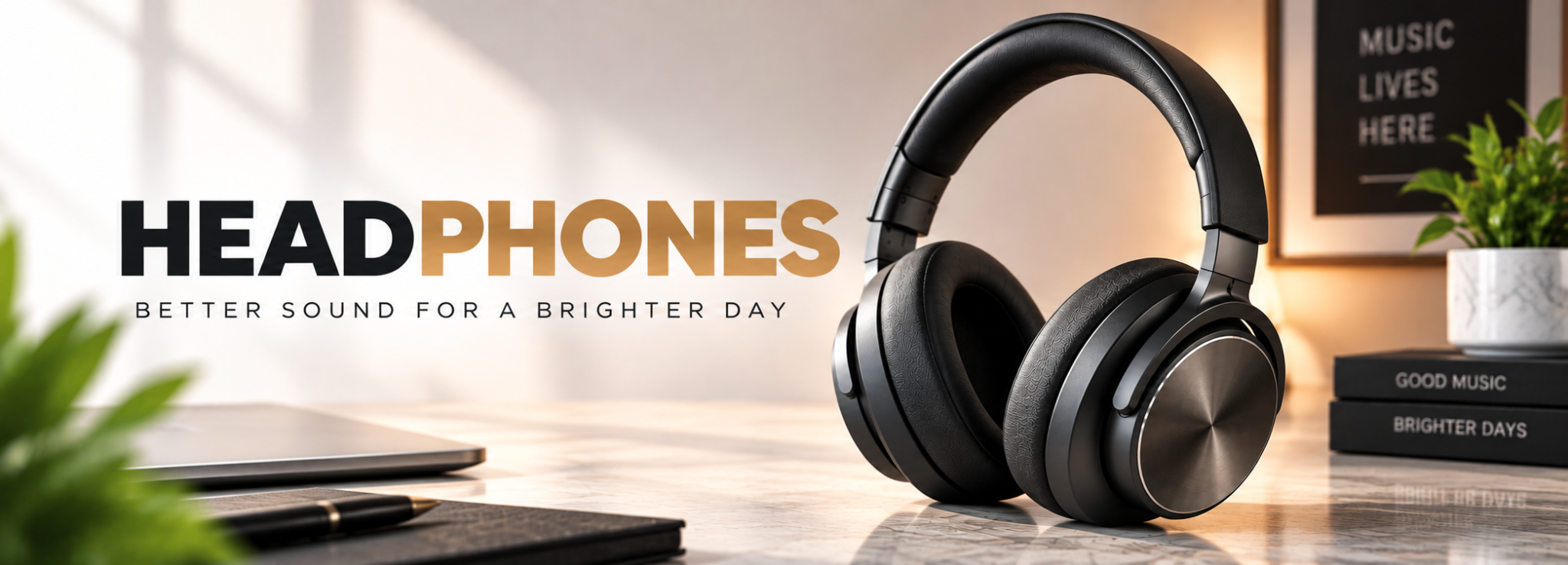
Headphones are small loudspeaker drivers worn on or around the head over a user’s ears. They are electroacoustic transducers that convert an electrical signal to a corresponding sound. Unlike a loudspeaker, which emits sound into the open air for anyone nearby to hear, headphones let a single user listen to an audio source privately.
11
Buying guides
17
Headphone reviews
7
Learn articles
EXPLORE
COMPARE
EVALUATE
UNDERSTAND
Headphones are also known as earphones or, colloquially, cans. Circumaural and supra-aural headphones use a band over the top of the head to hold the drivers in place. Another type, known as earbuds or earpieces, consists of individual units that plug into the user’s ear channel; within that category have been developed cordless earbuds using wireless technology have been developed.
Headphones connect to a signal source such as an audio amplifier, radio, CD player, portable media player, mobile phone, video game console, or electronic musical instrument, either directly using a cord or using wireless technology such as Bluetooth, DECT, or FM radio.
The first headphones were developed in the late 19th century for use by switchboard operators to keep their hands free. Initially, the audio quality was mediocre, and a step forward was the invention of high-fidelity headphones.
Headphones exhibit a range of different audio reproduction quality capabilities. Headsets designed for telephone use typically cannot reproduce sounds with the high fidelity of expensive units designed for music listening by audiophiles. Headphones that use cables typically have either a ¼ inch (6.4mm) or ⅛ inch (3.2mm) phone jack for plugging the headphones into the audio source.
Dome headphones are wireless, using Bluetooth connectivity to receive the audio signal by radio waves from source devices like cell phones and digital players. As a result of the Walkman effect, begin
Explore Headphone Types
ning in the 1980s, headphones started to be used in public places such as sidewalks, grocery stores, and public transit.
KEY TAKEAWAYS
01 — Headphones are small loudspeaker drivers worn on or around the head over a user’s ears.
02 — Headphones are also known as earphones or, colloquially, cans.
03 — Headphones connect to a signal source such as an audio amplifier, radio, CD player, portable media player, mobile phone, video game console, or electronic musical instrument.
04 — The first headphones were developed in the late 19th century for use by switchboard operators.
QUICK ANSWER
What are headphones?
Headphones are small loudspeaker drivers worn on or around the head over a user’s ears. They are electroacoustic transducers that convert an electrical signal to a corresponding sound.
BACKGROUND
History:
Headphones grew out of the need to free up a person’s hands when operating a telephone. Soon after the invention of the telephone, in the 1880s, telephone switchboard operators began using head apparatuses to mount the telephone receiver. The receiver was mounted on the head by a clamp that held it next to the ear.
The head mount freed the switchboard operator’s hands so that they could easily connect the wires of the telephone callers and receivers. The hand-mounted telephone receiver, in the singular form, was called a headphone. These hand-mounted phone receivers, unlike modern headphones, only had one earpiece.
Headphones appeared in the emerging field of wireless telegraphy, which was the beginning stage of radio broadcasting. Some early wireless telegraphy developers chose to use the telephone receiver’s speakers as the detector for the electrical signals of the wireless receiving circuit.
USE CASES
Applications:
Wired headphones may be used with stationary CD and DVD players, home theater systems, personal computers, or portable devices equipped with a headphone jack. Cordless headphones are not connected to their source by a cable. Instead, they receive a radio or infrared transmission link, such as FM, Bluetooth, or Wifi. These are battery-powered receiver systems, of which the headphone is only a component. Cordless headphones are used at events such as a client’s disco.
As an active component, wireless headphones tend to be costlier due to the necessity for internal hardware such as a battery, a charging controller, a speaker driver, and a wireless transceiver, whereas wired headphones are passive components, outsourcing speaker driving to the audio source.
TESTING
Applications for audiometric testing:
Virus-type specially designed headphones or earphones are also used to evaluate the status of the auditory system in the field of audiology for establishing hearing thresholds, medically diagnosing hearing loss, identifying other hearing-related diseases, and monitoring hearing status in occupational hearing conservation programs. Specific models of headphones have been adopted as the standard due to the ease of calibration and ability to compare results between testing facilities.
TECHNICAL
Electrical characteristics:
The electrical characteristics of dynamic loudspeakers may be readily applied to headphones because most headphones are small dynamic loudspeakers.
Impedance:
Headphones are available with high or low impedance. Low-impedance headphones are in the range of 16 to 32 ohms, and high-impedance headphones are about 100 to 600 ohms.
As the impedance of a pair of headphones increases, more voltage is required to drive it, and the loudness of the headphones for a given voltage decreases. In recent years, the impedance of newer headphones has generally decreased to accommodate lower voltages available on battery-powered CMOS-based portable electronics
.
This has resulted in headphones that can be more efficiently driven by battery-powered electronics. Consequently, newer amplifiers are based on designs with relatively low output impedance.
Sensitivity:
Sensitivity is a measure of how effectively an earpiece converts an incoming electrical signal into an audible sound. It thus indicates how loud the headphones are for a given electrical drive level.
It can be measured in decibels of sound pressure level per milliwatt or decibels of sound pressure level per volt. Both definitions are widely used, often interchangeably.
TECHNICAL
Specifications:
Headphone size can affect the balance between fidelity and portability. Generally, headphone form factors can be divided into four separate categories: circumaural (over-ear), supra-aural (on-ear), earbud, and in-ear.
Connectivity
Wired:
Wired headphones use a cable, typically connected to a headphone jack, to make a direct electrical connection to the source device.
Wireless:
Modern wireless or cordless earphones have no cord connecting the two earphones to the source device or each other; they receive audio utilizing a wireless technology such as Bluetooth. In historical usage, “wireless” referred to a connection to a radio receiver, which was known as wireless.
On some models, both audio streams are transmitted to one earphone, which forwards one stream to another Earphone.
Ear adaption
Circumaural:
Circumaural headphones have circular or ellipsoid earbuds that encompass the ears. Because they surround the ear, circumaural headphones can be designed to seal fully against the head to attenuate external noise.
FIT
Ear-fitting headphones
DESIGN
Earphones:
Earphones are very small headphones that are fitted directly in the outer ear, facing but not going into the ear canal. Earphones are portable and convenient, but many people consider them uncomfortable. They provide hardly any acoustic isolation and leave the room and ambient noise to sleep in; users may turn up the volume dangerously high to compensate, at the risk of causing hearing loss.
On the other hand, they let the user be better aware of their surroundings. Since the early days of the transistor radio, earphones have commonly been bundled with personal music devices.
In-ear headphones:
In-ear headphones, also known as in-ear monitors or canal phones, are small headphones with similar portability to earbuds that are inserted in the ear canal itself. IEMs are higher-quality in-ear headphones and are used by audio engineers and musicians as well and audiophiles.
The outer shells of in-ear headphones are made up of a variety of materials, such as plastic, aluminum, ceramic, and other metal alloys. Because in-ear headphones engage the car canal, they can be prone to sliding out, and they block out much environmental noise. Lack of sound from the environment can be a problem when sound is a necessary cue for safety or other reasons, such as when walking, driving, or riding near or in vehicular traffic.
DESIGN
Open- or closed-back:
Both circumaural and supra-aural headphones can be further differentiated by the type of earcups:
|
Open-back |
Closed-back |
|
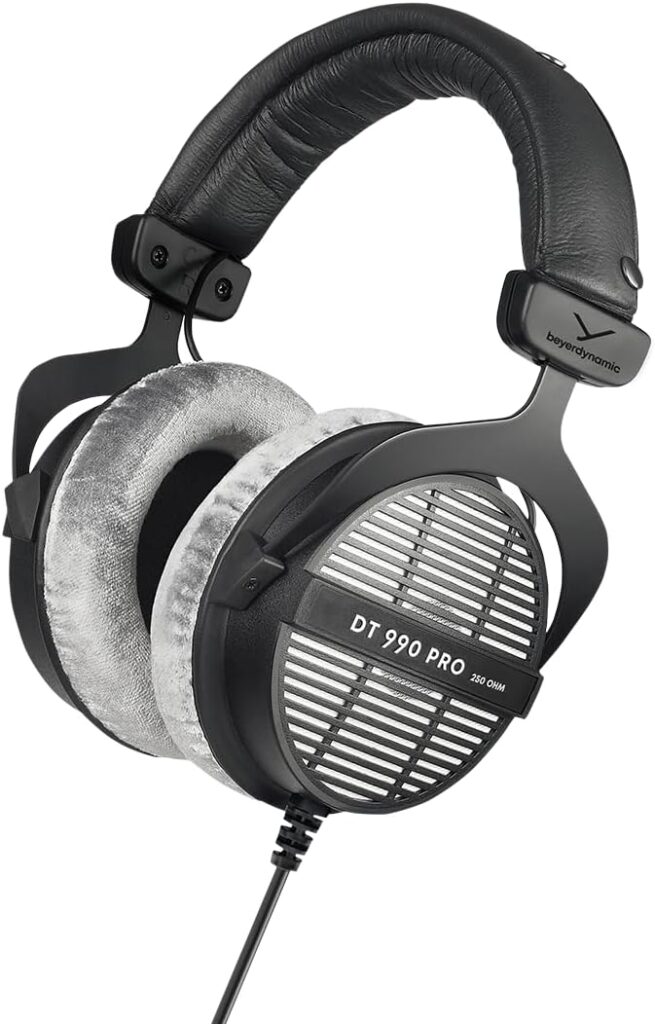
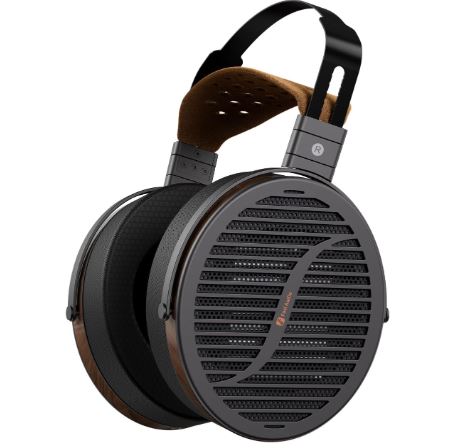
The headphones have the back of the earcups open. This leaks more sound out of the headphones and also lets more ambient sounds into the headphones, but gives a more natural speaker-like sound, due to including sounds from the environment. |
Close-back styles have the back of the earcups closed. They usually block some of the ambient noise. Closed-back headphones usually can produce stronger low frequencies than open-back headphones. |
Semi-open
They have a design that can be considered a compromise between open-back headphones. Some believe the term “semi-open” is purely for marketing purposes. There is no exact definition for the term semi-open headphones.
Whereas the open-back approach has hardly any measures to block sound at the outer side of the diaphragm and the closed-back approach has a closed chamber at the outer side of the diaphragm, a semi-open headphone can have a chamber to partially block sound while letting some sound through via openings and vents.
Headset
A headset is a headphone combined with a microphone. The headset provides the equivalent functionality of a telephone handset with a hands-free operation. Among applications for headsets, besides telephone use, are aviation, theater, television studio intercom systems, and console or PC gaming. Headsets are made with either a single earpiece. The microphone arm of headsets is either an external microphone type, where the microphone is held in front of the user’s mouth, or a voice tube, where the microphone is housed in the earpiece and speech reaches it using a hollow tube.
Communication headsets
Communication headsets are used for two-way communication and typically consist of a headphone and an attached microphone. Such headsets are used in a variety of professions such as aviation, military, sports, music, and many service-oriented sectors. They come in all shapes and sizes, depending on use, required noise attenuation, and fidelity of communication needed.
TECHNOLOGY
Ambient noise reduction:
Unwanted sounds from the environment can be reduced by excluding sound from the ear by passive noise isolation or, often in conjunction with isolation, by active noise cancellation.
Passive noise isolation is essentially using the body of the earphones, either over or in the ear, as a passive earplug that simply blocks out sound. The headphone type that provides the most attenuation is the in-ear canal headphones and closed-back headphones, both circumaural and supraaural.
TECHNOLOGY
Transducer technology:
Headphones use various types of transducers to convert electrical signals to sound.
Moving-coil
The moving coil driver, more commonly referred to as a “Dynamic” driver, is the most common type used in headphones. It consists of a stationary magnet element affixed to the frame of the headphones, which is set up in a static magnetic field. The magnet in headphones is typically composed of ferrite or neodymium. A voice coil, a light coil of wire, is suspended in the magnetic field of the magnet, attached to the diaphragm, typically fabricated from lightweight,
high-stiffness-to-mass-ratio cellulose, polymer, carbon material, paper, or the like.
Electrostatic
Electrostatic drivers consist of a thin, electricity-charged diaphragm, typically a coated PET film membrane, suspended between two perforated metal plates. The electrical sound signal is applied to the electrodes, creating an electrical field; depending on the polarity of this field, this diaphragm is drawn towards one of the plates.
Air is forced through the perforations; combined with a continuously changing electrical signal driving the membrane, a sound wave is generated. Electrostatic headphones are usually more expensive than moving-coil ones and are comparatively uncommon.
Electret
An electric driver functions along the same electromechanical means as an electrostatic driver. However, the Electret drivers have a permanent charge built into them, whereas electrostatics have the charge applied to the driver by an external generator. Electret and electrostatic headphones are relatively common. Original electrets were also typically cheaper and lower in technical capabilities and fidelity than electrostatics.
Planar magnetic Planar magnetic headphones use technology similar to electrostatic headphones but with some fundamental differences. They operate similarly to planar magnetic loudspeakers.
A planar magnetic driver consists of a relatively large membrane containing an embedded wire pattern. This membrane is suspended between two sets of permanent, oppositely aligned magnets. A current that passes through the wires embedded in the membrane produces a magnetic field that reacts with the field of the permanent magnets to induce movement in the membrane, which produces sound.
Thermoacoustic technology
The thermoacoustic effects generate sound from the audio frequency joule heating of the conductor, an effect that is not magnetic and does not vibrate the speaker. In 2013, a research group at Tsinghua University demonstrated a carbon nanotube thin-yarn earphone based on the thermoacoustic mechanism.
Other transducer technologies
Transducer technologies employed much less commonly for headphones include the Heil air motion transformer (AMT), piezoelectric film, ribbon planar magnetic, magnetostriction, and plasma or ionic. The first Heil AMT headphone was marketed by ESS Laboratories and was essentially an ESS AMT tweeter from one of the company’s speakers, driven at full range. Since the turn of the century, only the President of Switzerland has manufactured an AMT headphone.
PROS & CONS
Benefits and limitations
ADVANTAGES
Headphones can prevent other people from hearing the sound, either for privacy or to prevent disturbing others, as in listening in a public library. They can also provide a level of sound fidelity greater than loudspeakers of similar cost. Part of their ability to do so comes from the lack of any need to perform room correction treatments with headphones. High-quality headphones can have an extremely flat low-frequency response down to 20 Hz within 3 dB.
While a loudspeaker must use a relatively large speaker driver to reproduce low frequencies, headphones can accurately reproduce bass and sub-bass frequencies with speaker drivers only 40-50 millimeters wide. The impressive low-frequency performance is possible because they are so much closer to the ear that they only need to move relatively small volumes of air.
DISADVANTAGES
Marketed claims such as frequency response 4Hz to 20 kHz are usually overstatements; the product’s response at frequencies lower than 20 Hz is typically very small. Headphones are also useful for video games that use 3D positional audio processing algorithms, as they allow players to better judge the position of an off-screen sound source.
SAFETY
Health and Safety
Dangers and risks
Using headphones at a sufficiently high volume level may cause temporary and permanent hearing impairment or deafness. The headphone volume often has to compete with the background noise, especially in loud places such as subway stations, aircraft, and large crowds.
Extended periods of exposure to high sound pressure levels created by headphones at high volume settings may be damaging to hearing. Nearly 50% of teenagers and young adults in middle and high-income countries listen to unsafe levels of sound on their audio devices and smartphones. However, one hearing expert found in 2012 that “more than 5% of users select volume levels and listen frequently enough to risk hearing loss.
Other than hearing risks, there is a general danger that listening to loud music in headphones can distract the listener and lead to injury and accidents. Noise-canceling headphones add extra risk. S
everal countries and states have made it illegal to wear headphones while driving or cycling.
However, there have been no studies done to prove that exposure to in-ear headphones will cause contact dermatitis, but rather that there is a correlation between in-ear headphone use and contact dermatitis cases.
Occupational health and safety
Hearing risks from headphone use also apply to workers who must wear electronic or communication devices. Headsets as part of their daily job, and hearing damage depends on the exposure time. The National Institute for Occupational Safety and Health recommends that sound exposure not exceed 85 dB (A) over 8 8-hour work days as a time-weighted average.
NIOSH uses the 3dB exchange rate, often referred to as a “time-intensity tradeoff,” which means that if the sound exposure level is increased by 3 decibels, the duration of exposure should be cut in half.
On This Page
- History:
- Applications:
- Applications for audiometric testing:
- Electrical characteristics:
- Specifications:
- Ear-fitting headphones
- Earphones:
- Open- or closed-back:
- Ambient noise reduction:
- Transducer technology:
- Benefits and limitations
- Health and Safety
- FAQs
- Conclusion:
Sensitivity is a measure of how effectively an earpiece converts an incoming electrical signal into an audible sound. It thus indicates how loud the headphones are for a given electrical drive level.
Related Headphone Types
Open-Back Headphones
EXPLORE
Discover top-rated headphones
Best Headphones by Category
By Technology
By Price & Use
Latest Reviews
FAQs
What is the use of headphones?
Headphones can play a huge part in our lives. We use them to listen to our favorite music and podcasts, participate in Zoom calls, and watch shows or movies.
What is the meaning of headphones?
A device with parts that cover each ear through which you can listen to something, such as music, without other people hearing.
Who invented headphones and why?
Nathaniel Baldwin invented the first modern headphones in 1910. Baldwin was an American inventor who created headphones to improve sound clarity for the U.S.
How do headphones work?
Headphones work by converting electrical signals from your device into sound waves through small speakers called “drivers,” which essentially vibrate a diaphragm to create audible sound.
Which is better, headphones or earphones?
Generally, headphones are considered “better” than earphones because they usually offer superior sound quality with larger drivers, better noise isolation, and a more comfortable fit for long listening sessions, especially when choosing over-ear styles.
How loud is too loud for headphones?
According to most experts, a sound level above 85 decibels (dB) through headphones is considered “too loud” and can potentially damage your hearing with prolonged exposure, with the safest listening level generally considered to be around 60-70 dB.
Are headphones safer than earphones?
Headphones are considered slightly safer for your hearing than earphones because they sit further away from the eardrum, meaning you can listen at a lower volume to achieve the same sound level.
When not to use headphones?
You should limit your use of headphones when they are too loud or when you’ve been using them for too long.
Why is wearing headphones good?
They allow you to focus on specific sounds by blocking out external noise, which can be beneficial for tasks requiring concentration, like studying, working, or listening to audio content while in a noisy environment.
How to use headphones without damaging your ears?
To use headphones without damaging your ears, keep the volume at a moderate level, limit your listening time, take breaks regularly, choose over-the-ear headphones when possible, and consider noise-canceling features to allow for lower-volume listening.
Conclusion:
Headphones are probably going to be a bit better. It just goes to show that you know new products that come out in audio. They’re not necessarily better than the old ones. Some of them are, maybe, but you know, certainly not all of them, because this is still, I think you know, a leading contender at around.
Its asking price seems like there’s still a lot of work for a lot of other companies to do to be able to truly dethrone. I want companies to try and make something like that. Some headphones also have full bass extension.
Understanding how the different earphones and headphone advancements work assists with the choice of the right thing and understanding its benefits and limits, so that utilization can be made of the specific earphone headphone set.
Why HeadphonePilot?
HeadphonePilot publishes headphone reviews, buying guides, and educational articles to help you compare types, features, and models before you buy.