
Bose QuietComfort Headphones
Bose QuietComfort headphones are lightweight and comfortable. They are lighter than some other flagship options, and the cushioned headband and soft earcups make them suitable for long listening sessions. The headphones use a folding design, which makes them easier to carry in a bag.
The headphones have USB-C for charging, a 2.5 mm headphone connection, and a 3.5 mm audio cable for wired listening. The earcups have a simple design with physical controls, including a dedicated action button for switching listening modes. The headphones also use multiple microphones for calls and noise cancellation.
One of the biggest strengths of these headphones is their active noise cancellation. Quiet Mode blocks out surrounding noise, while Aware Mode lets you hear what is happening around you. Custom listening modes can also be created through the Bose app.
Pros
- Comfortable
- Lightweight
- Good build quality
- Strong active noise cancellation
- Adjustable EQ
- Multipoint Bluetooth
- Physical controls
- Wired listening option
- Up to 24 hours of battery life
Cons
- The fit may not feel secure for everyone during movement
- Battery life is good but not class-leading
- EQ controls are limited to bass, midrange, and treble
- The original model lacks some features found on newer Bose headphones
Key Specifications
- Bluetooth 5.1 with multipoint connectivity for two devices
- Battery life: up to 24 hours with noise cancellation enabled
- Quick charge: 15 minutes provides up to 2.5 hours of playback
- USB-C charging; wired listening via 2.5 mm-to-3.5 mm cable with in-line microphone
- Weight: about 0.52 lb (0.24 kg); folding design with carrying case
- Three-band EQ (bass, midrange, treble) via the Bose app
- Quiet Mode, Aware Mode, and custom listening modes
- Physical controls with dedicated Action button
- No stated water- or dust-resistance rating on the original model
Features
Design and Build Quality
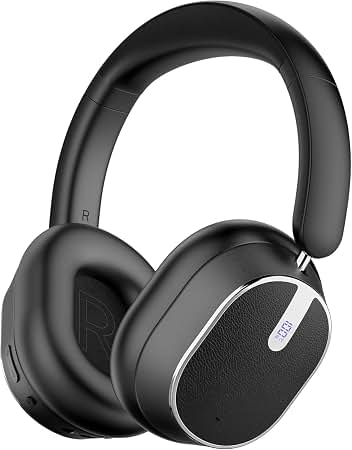
Bose QuietComfort headphones are over-ear headphones with a lightweight construction. The original model uses a combination of plastic, metal, and protein leather materials. The ear cushions are soft, and the headband has enough padding to keep pressure from building up during longer listening sessions.
The folding design is useful for portability. The earcups can fold inward, reducing the space they take up when stored in the included carrying case.
The headphones are not designed as sports headphones. Their over-ear construction can become uncomfortable during intense workouts, and there is no stated water- or dust-resistance rating for the original model. They are better suited to commuting, travel, office use, and everyday listening.
Comfort
Comfort is one of the strongest parts of the Bose QuietComfort design.
The earcups are soft and sit around the ears rather than directly on them. The headband is also well padded, and the relatively low weight makes the headphones comfortable for extended listening.
The fit can be a little less secure when you move your head around frequently. They are primarily designed for normal listening rather than running or intense exercise.
For people who wear glasses, the seal around the earcups can change slightly depending on the frame. This can affect bass response and noise isolation because the glasses create a small gap between the cushions and the head.
Sound Quality
The original Bose QuietComfort headphones have a somewhat bass-heavy sound profile. The overall tuning is still suitable for general music listening, but listeners who prefer a more neutral presentation may want to adjust the EQ.
The Bose app includes a three-band equalizer for bass, midrange, and treble adjustment. This is not a full parametric EQ, but it provides enough control to change the general character of the headphones.
The default sound has good clarity, and vocals remain easy to hear. Increasing the midrange can make vocals stand out more, while increasing the treble can add energy to some recordings. The bass can also be adjusted when the default tuning feels too heavy.
The headphones can produce plenty of volume, and the original testing found good separation and clarity at normal listening levels. However, the available measurement material also identified channel-matching problems in the tested units. That is worth keeping separate from the general listening impressions because it came from specific tested samples rather than Bose’s published specification.
Noise Cancellation
Noise cancellation is one of the main reasons to consider the Bose QuietComfort headphones.
The original testing found that the ANC was particularly effective against continuous low-frequency sounds. Engine noise, warehouse noise, and other persistent background sounds were heavily reduced.
With music playing at a moderate volume, much of the surrounding environment became difficult to hear. Without music, the headphones still reduced background noise, although voices and other sounds remained audible.
Quiet Mode provides the strongest noise cancellation, while Aware Mode allows environmental sounds to pass through. The Bose app also allows users to create custom modes and adjust the noise-cancellation level.
The effectiveness of the ANC can be a benefit on airplanes, buses, trains, and in busy workplaces. At the same time, strong noise cancellation means users should remain aware of their surroundings when walking in areas where hearing traffic or other hazards matters.
Transparency and Aware Mode
Aware Mode is designed to let outside sound through so you can hear your surroundings without removing the headphones.
It works well for nearby conversations and general environmental sounds. However, the clarity of distant announcements can depend on the environment and the distance from the sound source.
The Bose app also allows custom modes to be created, giving you more control over how much noise cancellation is applied.
Battery Life
The original Bose QuietComfort headphones are rated for up to 24 hours of battery life. Bose specifies this figure with noise cancellation enabled.
The original testing in the supplied material produced longer results under particular testing conditions, but those results should be treated as test-specific rather than a general battery-life claim.
The headphones use USB-C for charging. Bose also states that a 15-minute quick charge can provide up to 2.5 hours of playback.
When the battery is depleted, the headphones can still be used passively through the audio cable, although active noise cancellation and Active EQ are not available without power.
Connectivity
The original Bose QuietComfort headphones use Bluetooth 5.1 and support multipoint connectivity, allowing two devices to remain connected at the same time.
This is useful when switching between a phone and a computer. For example, you can listen to audio from a computer while remaining connected to your phone for calls.
The headphones also support wired listening through the included 2.5 mm-to-3.5 mm audio cable. The cable includes an in-line microphone, which provides another option for calls and communication.
Controls
The physical controls are straightforward.
The right earcup has volume controls and a multifunction button. The multifunction button can:
- Play or pause music
- Skip tracks
- Go back to a previous track
- Answer calls
- End calls
- Access the connected device’s voice assistant
The left earcup has the Action button. It can switch between Quiet Mode, Aware Mode, and custom listening modes. Pressing and holding the button can also activate a configured shortcut such as Spotify Tap or battery information.
Having physical buttons is useful because you do not need to reach for your phone every time you want to change the volume or listening mode.
Bose App
The Bose app provides additional controls for the headphones.
You can adjust the three-band EQ, create custom listening modes, manage connected devices, configure shortcuts, and install firmware updates.
The EQ is useful, although its simplicity may disappoint listeners who want detailed control over individual frequency ranges. For most users, however, bass, midrange, and treble adjustments are enough to change the overall sound.
Microphone Quality
The headphones have built-in microphones for phone calls and voice communication. The original testing included quiet-environment, background-noise, and wind tests.
The microphone can handle normal calls reasonably well, although noisy environments can affect clarity. Wind handling is also an important consideration when using the headphones outside.
The included wired cable also has an in-line microphone, giving you another option when using the headphones with a wired connection.
Portability
The Bose QuietComfort headphones are relatively easy to carry because they fold into the included case.
The original model weighs about 0.52 lb (0.24 kg), which helps keep the headphones comfortable during longer periods of use.
The carrying case also keeps the headphones and cables together when traveling.
Accessories
The original package includes:
- Bose QuietComfort headphones
- Carrying case
- 2.5 mm-to-3.5 mm audio cable
- USB-A-to-USB-C charging cable
- Safety documentation
Bose does not include a power adapter, so a compatible USB power adapter must be supplied separately.
Stability
The headphones generally stay in place during normal use, but they are not intended for vigorous movement.
The lightweight construction is comfortable for walking and everyday use, but users who frequently move their heads or exercise may prefer a more secure-fitting design.
Overall Performance
The Bose QuietComfort headphones get the fundamentals right. They are comfortable, lightweight, easy to operate, and particularly strong at active noise cancellation.
The sound is also flexible because the Bose app provides EQ controls. The default tuning has noticeable bass, but users can reduce or increase it depending on their preference.
The biggest limitation is that the original model does not provide the feature set found on Bose’s newer premium headphones. It was designed as a simpler, more affordable QuietComfort option rather than a feature-heavy flagship.
Bose QuietComfort Headphones (2nd Gen)

Bose released the QuietComfort Headphones (2nd Gen) in August 2026. The new model replaces the original 2023 QuietComfort Headphones and adds several changes, including Bose TrueSpatial Technology with Immersive Audio modes, Bluetooth 5.4 multipoint connectivity, two-way USB-C audio, and updated physical controls. Bose lists up to 24 hours of battery life, or 18 hours when Immersive Audio is used.
The second-generation model also supports USB-C audio for both listening and voice input, which is a significant change from the original model.
Bose currently lists the QuietComfort Headphones (2nd Gen) at $359, while the original QuietComfort Headphones are still listed separately in Bose’s lineup.
Frequently Asked Questions
Are Bose QuietComfort headphones comfortable for long periods?
Yes. The original QuietComfort headphones are lightweight and use soft over-ear cushions and a padded headband, making them well suited to extended listening sessions.
How long does the Bose QuietComfort battery last?
The original Bose QuietComfort headphones provide up to 24 hours of battery life. Bose also states that a 15-minute quick charge can provide up to 2.5 hours of playback.
Can Bose QuietComfort headphones be used without Bluetooth?
Yes. The original model includes an audio cable with a 2.5 mm connection for the headphones and a 3.5 mm connection for the source device. Passive listening is still possible when the battery is depleted, although ANC and Active EQ are unavailable.
Do Bose QuietComfort headphones support multipoint Bluetooth?
Yes. The original QuietComfort headphones support multipoint Bluetooth and can remain connected to two devices.
Can you adjust the sound on Bose QuietComfort headphones?
Yes. The Bose app provides a three-band EQ with bass, midrange, and treble controls.
Are Bose QuietComfort headphones good for travel?
Yes. Their strong noise cancellation, lightweight design, folding construction, carrying case, and long battery life make them well suited to travel. Bose specifically rates the original model for up to 24 hours of playback.
What is the difference between the original QuietComfort and the QuietComfort Headphones (2nd Gen)?
The 2nd Gen model was released in 2026 and adds TrueSpatial Technology and Immersive Audio, Bluetooth 5.4, two-way USB-C audio, and updated controls. The original model uses Bluetooth 5.1 and does not have Immersive Audio.
Conclusion
The Bose QuietComfort headphones are a strong choice if comfort, sound quality, and noise cancellation are your main priorities. They are comfortable to wear for long periods, offer great bass, and have effective noise cancellation. The physical buttons are also practical and easy to use.
There are a few drawbacks, such as the unusual 2.5 mm connection on the headphones and the lack of automatic pause when you take them off. The shortcut button is also somewhat limited if you do not use Spotify.
Despite these small issues, the Bose QuietComfort headphones offer great value and a high-quality overall experience. They are comfortable, sound good, and provide excellent noise cancellation, making them a solid option for everyday listening, travel, and long listening sessions.