
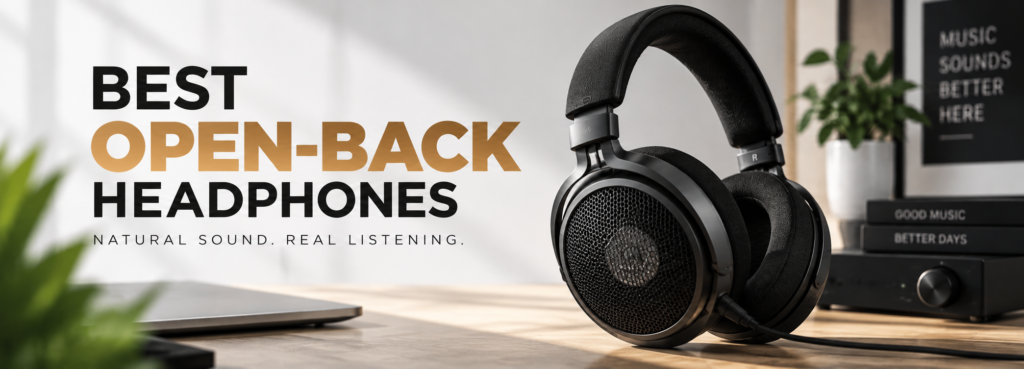
Best Open-Back Headphones
Open-back headphones allow sound to move through the back of the ear cups. They do not block out ambient noise in the way closed-back headphones do, and sound from your headphones can also be heard by people sitting nearby.
For some people, that sounds like a disadvantage. For others, it is exactly what makes open-back headphones appealing.
The open design can give music a more airy, spacious, and natural presentation. You can also remain aware of what is happening around you while listening. This is one reason open-back headphones are popular with audiophiles, music producers, mixing engineers, and people who enjoy critical listening at home.
There is a trade-off, though. Open-back headphones are not designed for privacy or strong noise isolation. If you are sitting next to someone in a quiet office, traveling on a plane, or listening in a busy place, sound leakage can be a problem.
We looked at open-back headphones across different price ranges and picked the models below for different listening needs. Some are high-end audiophile headphones, while others are much more affordable for someone trying an open-back design for the first time.
Quick Answer: Overall, my top three picks are the Audeze LCD-5 for audiophiles, Focal Utopia for a premium flagship experience, and Philips SHP9500 for budget-conscious buyers.
Expert Research • Real-World Use Cases • Clear Comparisons • Updated Regularly
Best Open-Back Headphones at a Glance
| Headphone | Best For | Type |
|---|---|---|
| Audeze LCD-5 | Audiophile listening | Planar magnetic |
| Sennheiser HD 800 S | Detail and soundstage | Dynamic |
| Focal Utopia | Premium listening | Dynamic |
| Philips SHP9500 | Budget buyers | Dynamic |
| SIVGA P-II | Mid-range planar magnetic listening | Planar magnetic |
Our Top 5 Open-Back Headphones
A quick side-by-side look at the five open-back headphones covered in this guide, in the order reviewed below.
#1

Audeze LCD-5
Best Audiophile
The Audeze LCD-5 is a high-end audiophile headphone made for listeners who care deeply about sound quality and detail.
#2
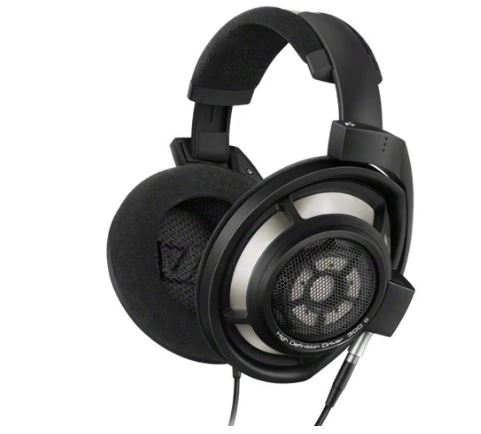
Sennheiser HD 800 S
Best for Detail & Soundstage
The Sennheiser HD 800 S is one of the best-known open-back headphones for people who want detail and a large sense of space.
#3
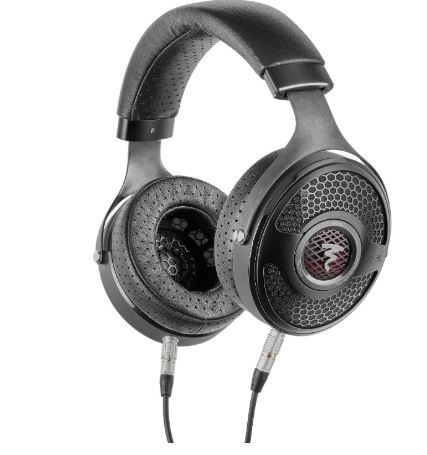
Focal Utopia
Best Premium
The Focal Utopia is a flagship open-back headphone designed for listeners who are willing to spend heavily on their audio equipment.
#4

Philips SHP9500
Best Budget
The Philips SHP9500 is the most affordable option on this list and is a good starting point for someone who wants to experience open-back headphones without spending a large amount of money.
#5

SIVGA P-II
Best Mid-Range
The SIVGA P-II is a planar magnetic open-back headphone with a distinctive wood-and-metal design.
1. Audeze LCD-5 — Best Audiophile Open-Back Headphone
What We Like
Excellent sound quality
Detailed presentation
Comfortable for long listening sessions
Relatively light for a high-end planar magnetic headphone
What We Don’t Like
Very expensive
Your source and amplification can affect how well you get the most from it
The Audeze LCD-5 is a high-end audiophile headphone made for listeners who care deeply about sound quality and detail. It is not an everyday budget headphone, and its price puts it in a category aimed at serious listeners.
The LCD-5 uses Audeze’s planar magnetic technology and a 90 mm transducer. Audeze lists the impedance at 14 ohms and the sensitivity at 90 dB/1 mW. The headphone weighs about 420 grams.
The weight is worth mentioning because many planar magnetic headphones are heavy. The LCD-5’s relatively low weight makes it easier to wear for longer listening sessions.
Audeze also uses a combination of lightweight materials in the construction to keep the headphone rigid while reducing unnecessary weight.
There was also some older information suggesting that the LCD-5 did not come with a 3.5 mm adapter. Audeze’s current package includes a 4-pin XLR cable, a 4-pin XLR-to-1/4-inch adapter, and a 1/4-inch-to-3.5 mm adapter.
The LCD-5 is a headphone for someone who already knows they want a high-end listening setup. You do not need to spend this much to enjoy an open-back headphone, but if your priority is getting as much detail as possible from your music, the LCD-5 is a serious option.
Best for: Audiophiles, critical listening, detailed music playback, and high-end home audio.
2. Sennheiser HD 800 S — Best for Detail and Soundstage
What We Like
Excellent detail
Very spacious presentation
Comfortable for long listening
Detachable cable
Strong choice for critical listening
What We Don’t Like
Expensive
300-ohm impedance needs to be considered when choosing your source
The Sennheiser HD 800 S is one of the best-known open-back headphones for people who want detail and a large sense of space.
Sennheiser lists the HD 800 S as an open-back dynamic headphone with a 300-ohm impedance and a weight of 330 grams. The current model comes with a 3-meter cable and supports 6.35 mm and balanced 4.4 mm connections.
The biggest attraction here is the presentation. The HD 800 S can make a recording feel spacious, and small details in a track can be easier to notice.
This makes it particularly enjoyable with classical music, acoustic recordings, live performances, and tracks where several instruments occupy different positions.
It is also comfortable enough for long listening sessions, thanks to its large ear cups and relatively light weight.
The 300-ohm impedance is something to consider before buying. It does not mean you automatically need an expensive amplifier, but you should make sure your source can drive the headphones properly.
If your main reason for buying an open-back headphone is a large soundstage and detailed listening, the HD 800 S is one of the models I would look at first.
Best for: Soundstage, critical listening, classical music, acoustic recordings, and detailed music.
3. Focal Utopia — Best Premium Open-Back Headphone
What We Like
- Excellent sound quality
- Premium construction
- Detailed and dynamic presentation
- High-quality materials
What We Don’t Like
- Extremely expensive
- A suitable source can help you get the most from it
- Heavier than some competing headphones
The Focal Utopia is a flagship open-back headphone designed for listeners who are willing to spend heavily on their audio equipment.
Focal uses a 40 mm pure beryllium M-shaped dome driver. The Utopia has an 80-ohm impedance and weighs about 490 grams. Focal also includes a 3.5 mm cable, a 4-pin XLR cable, and a 3.5 mm-to-6.35 mm adapter.
The construction is one of the things that sets the Utopia apart from less expensive headphones. Focal combines premium materials with its beryllium driver and open-back design.
The sound is detailed and dynamic, making the Utopia enjoyable when you want to sit down and focus on an album rather than simply play music in the background.
Its biggest weakness is the price. Very few listeners need to spend this much for a good open-back headphone. The Utopia makes more sense for someone who specifically wants a flagship product and is comfortable paying a premium for it.
Best for: High-end audiophiles, serious music listening, and buyers looking for a flagship headphone.
4. Philips SHP9500 — Best Budget Open-Back Headphone
What We Like
Comfortable design
Clear sound
Affordable
Detachable cable
Easy to drive compared with many high-end headphones
What We Don’t Like
Large design
May not feel secure enough for everyone
Simpler construction than expensive headphones
The Philips SHP9500 is the most affordable option on this list and is a good starting point for someone who wants to experience open-back headphones without spending a large amount of money.
Philips lists the SHP9500 with 50 mm neodymium drivers, a 32-ohm impedance, and 101 dB sensitivity. It has an open acoustic system and comes with a detachable 3-meter cable and a 3.5 mm-to-6.3 mm adapter.
The sound is clear, and the open construction gives the headphones a spacious presentation. The 32-ohm impedance also makes them relatively easy to use with ordinary sources.
The design is fairly large, though. Some people will like the fit, while others may prefer something that sits more securely on the head.
You also should not expect the same construction quality as a headphone that costs several times more.
Still, if you have a limited budget and want to see whether you enjoy the open-back listening experience, the SHP9500 is an appealing option.
Best for: Beginners, budget-conscious listeners, home listening, and first-time open-back headphone buyers.
5. SIVGA P-II — Best Mid-Range Planar Magnetic Open-Back Headphone
What We Like
Comfortable ear pads
Attractive wood-and-metal construction
Planar magnetic driver
Spacious and detailed presentation
Good for home listening
What We Don’t Like
Bulky
Not suitable when you need isolation
The SIVGA P-II is a planar magnetic open-back headphone with a distinctive wood-and-metal design.
SIVGA lists a 97 × 76 mm planar magnetic diaphragm and a 32-ohm impedance. The company also describes the P-II as having a balanced presentation with good transparency and detail.
The walnut wood construction gives it a different appearance from many modern headphones. The ear pads are also designed for longer listening sessions.
The planar magnetic driver is another reason to consider the P-II. It gives listeners who are moving up from entry-level headphones a chance to try this type of driver without immediately moving into the most expensive models.
The P-II is still fairly large, so it makes more sense for home listening than carrying around every day.
Best for: Mid-range audiophile listening, planar magnetic fans, and home use.
More About Open-Back Headphones
What Should You Look for When Buying Open-Back Headphones?
Sound Signature
Think about the type of sound you enjoy.
Some headphones have a more neutral presentation, while others put more emphasis on bass, treble, detail, or energy.
There is no sound signature that will be perfect for everyone.
Comfort
Comfort becomes important when you plan to wear headphones for several hours.
Pay attention to weight, ear-pad material, headband design, clamping force, and ear-cup size.
A headphone can sound fantastic but still be a poor choice if it becomes uncomfortable after an hour.
Impedance and Sensitivity
Check the impedance and sensitivity before buying.
Some headphones are easy to drive from portable devices, while others can benefit from a more capable source.
Do not judge amplifier requirements from impedance alone. Look at the complete specifications and consider what equipment you already own.
Sound Leakage
This is one of the most important things to understand before buying open-back headphones.
If you need privacy, choose closed-back headphones instead.
If you normally listen alone at home, leakage may not matter to you.
Listening Environment
Think about where you actually use your headphones.
A bedroom, home office, or dedicated listening room is a good environment for open-back headphones.
An airplane, coffee shop, busy office, or public transportation is generally better suited to a closed-back design.
Price
You do not have to spend thousands of dollars to experience open-back headphones.
Affordable models can provide a spacious and enjoyable presentation, while expensive models can o
Frequently Asked Questions
Final Verdict
Which Open-Back Headphone Should You Buy?
The right open-back headphone depends on your budget, equipment, and listening environment.
For serious audiophile listening, the Audeze LCD-5 is my top choice for its detailed sound and planar magnetic design. The Focal Utopia is a great premium option for buyers who want a flagship headphone, while the Sennheiser HD 800 S stands out for its spacious soundstage and detail.
If you’re on a tighter budget, the Philips SHP9500 offers a great open-back experience at a much lower price. The SIVGA P-II is also worth considering if you want a mid-range planar magnetic headphone.
Overall, my top three picks are the Audeze LCD-5 for audiophiles, Focal Utopia for a premium flagship experience, and Philips SHP9500 for budget-conscious buyers
Want to Explore More Headphone Types?
Compare open-back headphones with other headphone types and find the right fit for your listening needs.
Ready to Find Your Perfect Open-Back Headphones?
Overall, my top three picks are the Audeze LCD-5 for audiophiles, Focal Utopia for a premium flagship experience, and Philips SHP9500 for budget-conscious buyers. Scroll up to compare all five and find your perfect match.