
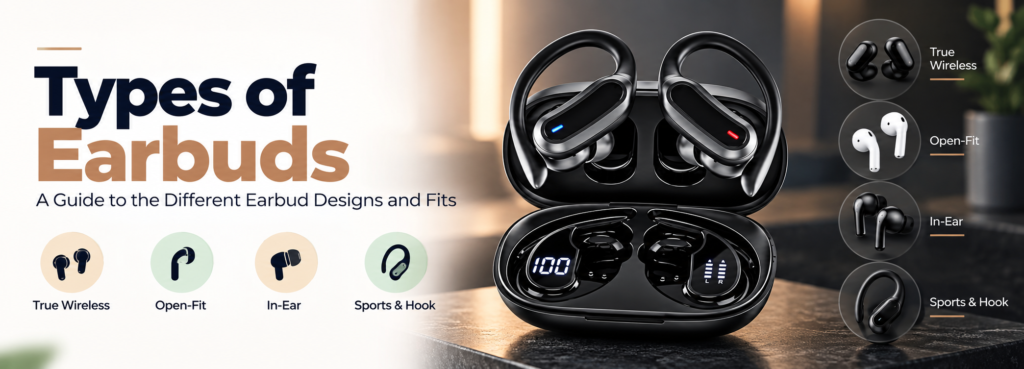
What are earbuds?
Earbuds are a small type of headphone that can be easily worn in the ear. They are lightweight and comfortable to use. Some earbuds have rubber or silicone ear tips that provide comfort when worn in the ear. One of the notable characteristics of earbuds is their lightweight design and wireless connectivity. Wireless earbuds do not have wiring connecting them to the device. They connect to a device through Bluetooth.
Types of Earbuds:
There are many types of earbuds, and the right type depends on their features, advantages, fit, and performance. Different earbuds are designed for different situations, such as everyday listening, workouts, commuting, or use in noisy environments. The main types of earbuds are explained below.
1. In-Ear Earbuds
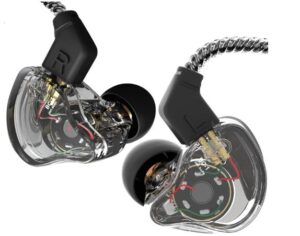
In-ear earbuds are one of the most common types of earbuds. They are designed to fit inside the ear canal and are usually compact and portable.
- Because they sit inside the ear, they can create a seal that helps block outside noise and improve sound isolation.
- They are commonly used for everyday listening, commuting, running, jogging, and workouts.
- Many in-ear earbuds use silicone or foam ear tips to create a better seal.
- Different ear-tip sizes can significantly affect both comfort and sound isolation.
- A good fit can improve both sound isolation and overall listening comfort.
- A poor fit can affect bass response, stability, and comfort, even when the earbuds themselves have good sound quality.
- A poor fit can also create pressure points, pain, or irritation during longer listening sessions.
- Some people simply do not like the feeling of having something inserted into their ear canal.
- Strong noise isolation can also reduce awareness of the surrounding environment, so users need to be careful in situations such as crossing roads.
2. Open-Fit / Half-In-Ear Earbuds
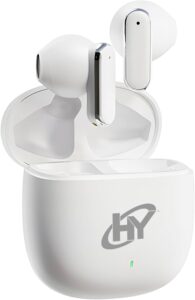
Open-fit or half-in-ear earbuds sit in the outer part of the ear without deeply entering the ear canal. They can be more comfortable for people who do not like the feeling of silicone ear tips or deep insertion.
- They allow more ambient sound to reach the listener, so users can remain more aware of their surroundings.
- The main trade-off is weaker noise isolation.
- Sound can also leak out, meaning people nearby may hear the audio at higher volumes.
- Because these earbuds generally rely on a particular shape rather than interchangeable ear tips, they may not fit every person’s ears securely.
- Some people can run with them without problems, while others find that they frequently fall out.
- Apple’s AirPods are an example of this type of design.
3. True Wireless Earbuds (TWS)
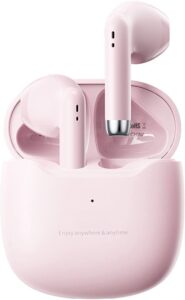
True wireless earbuds have no cable connecting the two earbuds. They are among the most compact and portable types of earbuds.
- They normally come with a charging case that stores and recharges the earbuds.
- Their small size makes them convenient to carry in a pocket.
- They use Bluetooth for wireless connectivity.
- Modern true wireless earbuds can include features such as active noise cancellation, transparency mode, touch controls, microphones, ear detection, and multipoint connectivity.
- Battery life depends on the specific model and how features such as ANC are used.
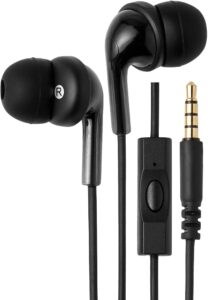
4. Wired Earbuds
As the name suggests, wired earbuds have a cable that connects them to a device such as a computer, smartphone, laptop, or other audio source.
- They are a traditional type of earbud and do not require a battery for the earbuds themselves.
- Wired earbuds can also be less expensive than many wireless models.
- However, the attached cable can become tangled and may be inconvenient during movement.
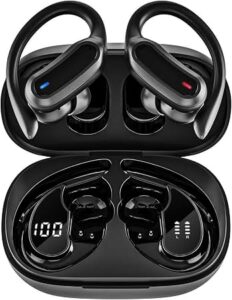
5. Wireless Earbuds
Wireless earbuds do not use a cable to connect directly to the audio source. Most modern wireless earbuds use Bluetooth for connectivity.
- They are convenient to use and provide more freedom of movement than wired earbuds.
- The trade-off is that they require batteries and need to be recharged.
- Battery life varies considerably between models, so it is worth checking both the earbuds’ playback time and the additional charges provided by the charging case.
True wireless earbuds are a type of wireless earbud in which there is no cable connecting the two earbuds.
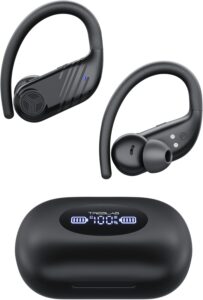
6. Ear-Hook Earbuds
Ear-hook earbuds have a hook that attaches around or over the ear. The hook provides additional security and helps prevent the earbuds from falling out.
- They are particularly useful for running, jumping, and other workouts.
- The hook design is especially useful for users who want additional stability during sports activities.
- They can be less comfortable for people who wear glasses because the ear hook can interfere with the glasses frame.
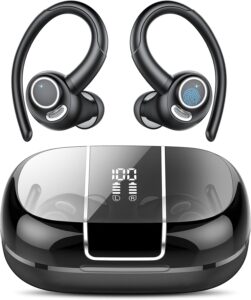
7. Sports Earbuds
Sports earbuds are designed with physical activity in mind.
- They may use wing tips, sports fins, or hooks to keep the earbuds securely in place.
- They are useful for running, cycling, gym workouts, and other activities involving movement.
- Sweat and water resistance are important features for active users.
- A secure fit helps prevent the earbuds from falling out during exercise.
- Some sports-oriented earbuds are designed to remain stable even during fast movements.
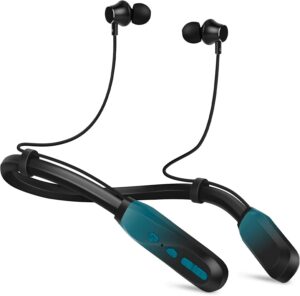
8. Neckband Earbuds
Neckband earbuds have speakers connected by a small, lightweight band that sits around the back of the neck. The band can remain around the user’s neck when the earbuds are not being used.
- They can offer comparatively good battery life because the neckband provides space for a larger battery than many completely wireless designs.
- Their design can make them comfortable for everyday use.
- They can be used for phone calls, watching videos, and listening to music.
- Many models are sweat-resistant and can work well for light sporting activities.
- The neckband can become less convenient during strenuous activities such as jumping or fast movement.
Features:
The type of earbud is only one part of the buying decision. Fit, sound quality, noise cancellation, battery life, durability, and connectivity can make a significant difference in everyday use.
Fit
- Fit is one of the most important factors when choosing wireless earbuds.
- Different ear-tip sizes and materials can improve the seal and comfort.
- A good fit can improve both sound isolation and overall listening comfort.
- A poor fit can affect bass response, stability, and comfort, even when the earbuds themselves have good sound quality.
Sound Quality
- Good earbuds should have well-defined bass, detailed treble, and natural-sounding mids.
- A wider soundstage can also be desirable, although the perceived soundstage depends on the earbud’s design and tuning.
- Premium earbuds can provide greater depth, detail, nuance, and instrument separation.
- Bluetooth codecs such as LDAC and aptX Adaptive can support higher-quality Bluetooth audio when the earbuds and connected device both support the required codec.
- Sound quality also depends on the driver, tuning, fit, source quality, and other parts of the audio system, not just the Bluetooth codec.
Active Noise Cancellation (ANC)
- ANC reduces unwanted ambient sounds around the listener.
- It can be useful for traffic, crowds, commuting, travel, and other noisy environments.
- Transparency mode does the opposite by allowing surrounding sounds to be heard.
- Transparency mode can be particularly useful for runners and pedestrians who need to remain aware of traffic and other nearby sounds.
- ANC performance varies between models, so the presence of ANC alone does not mean that every earbud will block the same amount of noise.
Noise-canceling earbuds have an ANC (active noise cancellation) feature that helps reduce unwanted sounds from the surrounding environment. ANC works by producing sound waves that counteract certain external sounds before they reach the listener.
These earbuds are great for people who don’t want surrounding noise while listening to music or working in noisy environments. However, ANC can reduce awareness of important sounds, so users should be careful when walking, cycling, or driving near traffic. Transparency or ambient modes can be useful when you need to hear what is happening around you.
Voice Calling
- Built-in microphones are important for phone calls and video conferences.
- Voice clarity and background-noise reduction are key considerations.
- Microphone performance can vary significantly between different earbud designs, especially in noisy outdoor environments.
Smart Features
- Ear detection can automatically pause playback when an earbud is removed.
- Companion apps can provide firmware updates and EQ controls.
- Touch controls can be customized on some models.
- Some earbuds offer volume controls directly from the earbuds.
- Spatial audio is another feature available on some modern earbuds and headphones.
- Multipoint Bluetooth allows compatible earbuds to maintain connections with two devices simultaneously, making it easier to switch between devices such as a computer and phone.
Durability
- Splash and water resistance are important for people using earbuds during sports or outdoor activities.
- An IPX4 rating is an example of basic protection against water splashes, but it does not mean that the earbuds are waterproof or suitable for submersion.
- The charging case should also be durable and have a strong hinge because it is frequently used to store and recharge the earbuds.
Battery Life
- Battery life varies widely between earbuds and depends on factors such as volume, ANC use, connectivity, and other features.
- Charging cases can provide additional charges when the earbuds are placed inside the case.
- Quick charging can provide additional listening time after a short charge.
- Wireless charging is available as a bonus feature on some models.
- Battery capacity naturally decreases over time, and the small rechargeable batteries used in many earbuds generally are not user-replaceable.
Frequently Asked Questions
What are the main types of earbuds?
The main types include in-ear, open-fit or half-in-ear, true wireless, wired, wireless, ear-hook, sports, and neckband earbuds. Each design has different advantages in terms of fit, stability, portability, and noise isolation.
What is the difference between in-ear and open-fit earbuds?
In-ear earbuds sit inside the ear canal and can create a stronger seal for noise isolation and bass response. Open-fit earbuds sit in the outer ear and allow more outside sound to reach the listener, but they generally provide less noise isolation.
Are true wireless earbuds better than wired earbuds?
Neither type is automatically better. True wireless earbuds offer greater freedom of movement and convenience, while wired earbuds do not require the earbuds to be recharged and can be a simpler choice for compatible devices.
Which type of earbuds is best for workouts?
Sports earbuds and ear-hook earbuds are generally well suited to workouts because they are designed to stay secure during movement. Sweat or water resistance is also useful for exercise.
Do all wireless earbuds have noise cancellation?
No. Wireless connectivity and active noise cancellation are separate features. Wireless earbuds can use Bluetooth without having ANC, while some models include both ANC and transparency modes.
Can open-fit earbuds block outside noise?
They can reduce some outside sound, but they generally provide less passive noise isolation than in-ear earbuds with properly fitted ear tips. Their open design allows more ambient sound to reach the listener.
Are bone-conduction headphones earbuds?
Bone-conduction headphones are often discussed alongside earbuds, but they use a different method of delivering sound. They transmit vibrations through the bones near the ear rather than sending sound directly through the ear canal.
How long do wireless earbuds last on a charge?
There is no single battery-life figure for all wireless earbuds. Playback time varies by model and can be affected by volume, ANC, and other features. The charging case usually provides additional charges between trips to a power source.
Conclusion
There are many types of earbuds, and each type has its own advantages and limitations. In-ear earbuds can provide a secure fit and better sound isolation, while open-fit earbuds allow more surrounding sound to reach the listener. True wireless earbuds are convenient and portable, whereas ear-hook and sports earbuds are designed to provide better stability during physical activities.
Features such as fit, sound quality, ANC, microphone performance, durability, connectivity, and battery life also affect the overall experience. The best type of earbud depends on how and where you plan to use it, so these factors should be considered along with the earbud’s design.
On This Page
- Types of Earbuds:
- 1. In-Ear Earbuds
- 2. Open-Fit / Half-In-Ear Earbuds
- 3. True Wireless Earbuds (TWS)
- 4. Wired Earbuds
- 5. Wireless Earbuds
- 6. Ear-Hook Earbuds
- 7. Sports Earbuds
- 8. Neckband Earbuds
- Fit
- Sound Quality
- Active Noise Cancellation (ANC)
- Voice Calling
- Durability
- Battery Life