
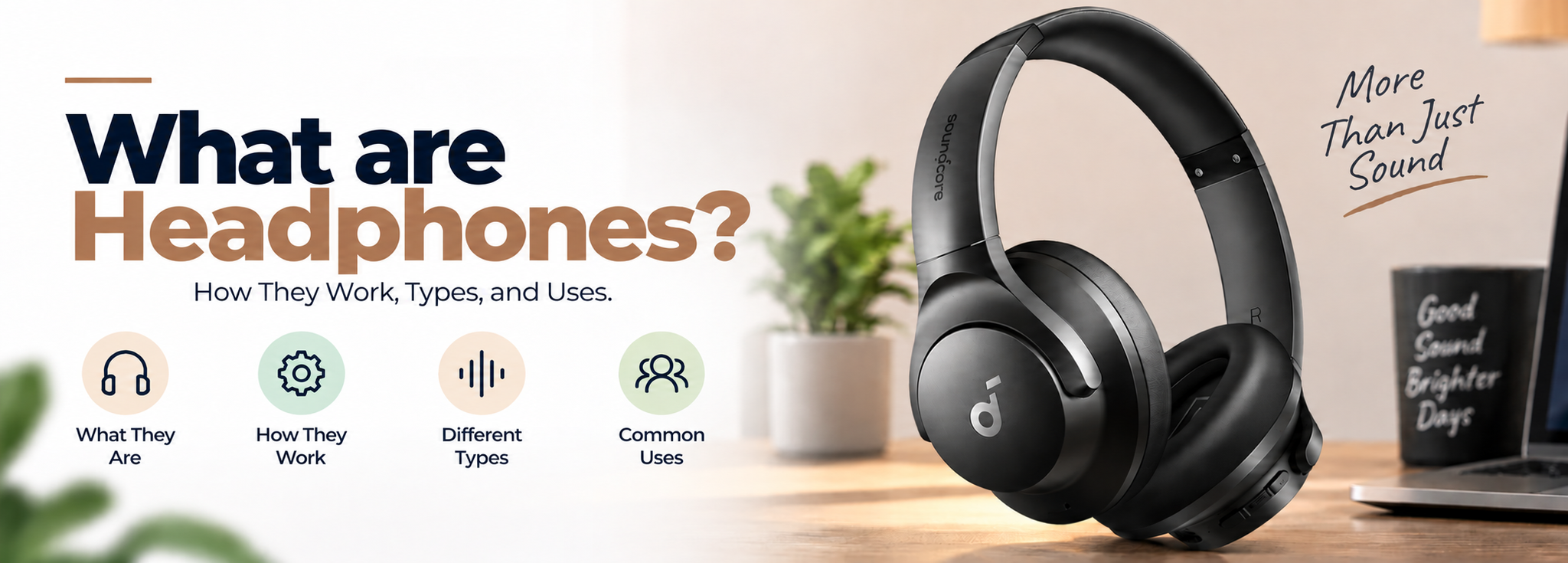
What are headphones?
Headphones are small loudspeakers that are hardware devices and can be connected to mobile phones, laptops, and computers with wires or wirelessly via Bluetooth. They can be used for watching movies and dramas, playing games, listening to music, etc., without disturbing the surrounding people. Headphones are also sometimes referred to as earphones.
What are the types of headphones?
Over-ear headphones
Over-ear headphones are one of the types of headphones that have large earcups. The earcups are large enough to cover the listener’s ears completely. These headphones provide comfort to the ears because of their cushioned earcups.
On-ear headphones
These headphones have smaller earcups than over-ear headphones. Their earcups do not fully enclose the listener’s ears but sit directly on them while providing a balance of comfort and natural sound. You can use these headphones for studying, working, listening to music, etc. They also allow you to remain more aware of your surroundings.
Open-back headphones
Open-back headphones allow air to pass through the earcups from the back of the speaker driver because gaps are left in the outer housing during manufacturing. The advantage of open-back headphones is that they can deliver an immersive and natural sound to the listener, although they provide little isolation from ambient noise.
Closed-back headphones
Closed-back headphones are designed so that no gaps are left in the outer housing. This means they can block out some ambient noise because the backs of the earcups are fully sealed, preventing outside sound from passing through easily. They provide better isolation in environments with surrounding noise.
Earbuds
Earbuds are one of the most convenient and portable types of headphones. Because of their lightweight design, they are preferred by many individuals. They rest in or around the ears and are considered suitable for outdoor workouts, exercise, and listening to music.
What can headphones be used for?
Headphones can be used for:
- Listening to music
- Gaming
- Watching movies or dramas
- Enjoying music during exercise or at the gym
- Communicating or having a live video call
- Educational purposes, such as taking online classes
- Listening privately without disturbing people around you
- Monitoring audio
Features of headphones
The features of headphones are given below:
Impedance
Impedance is the electrical resistance of headphones and can affect how easily they can be driven by an audio source. Headphones with higher impedance may require more voltage from an amplifier to reach their intended volume and performance, while lower-impedance headphones are generally easier to drive from devices such as smartphones and laptops.
Frequency response
Frequency response is also one of the major characteristics of headphones. It describes the range of frequencies that headphones can reproduce, usually measured in hertz (Hz). Frequency response alone does not determine whether headphones will sound good, but it helps describe how they reproduce low, mid, and high frequencies.
Sensitivity
Sensitivity is a measure of how loud headphones can play when given a specific amount of power or voltage. Higher-sensitivity headphones can generally produce more volume from the same source, while lower-sensitivity headphones may require more power to reach the same volume.
What are the parts of a headphone?
Headband
The headband is also considered the arc of the headphones that is present between the ears, crossing over the head. It is usually made of plastic or metal and may be cushioned with leather, synthetic leather, fabric, or other materials.
Headphone speakers
These speakers deliver sound to the listener’s ears. The quality of the headphone speakers, also called drivers, has a major effect on the overall sound. Better-quality drivers and headphone design can provide clearer and more natural sound.
Headphone cushions
The headphone speakers are surrounded by cushions made from soft materials, often called ear pads. These cushions provide comfort to the ears of the listeners and help the headphones stay securely around the ears without causing unnecessary pressure.
Cable
A cable is attached to wired headphones. One end is connected to the headphones, while the other end is attached to devices such as smartphones, computers, laptops, or other audio sources. The cable carries the electrical audio signal from the source to the headphone drivers.
Advantages of headphones
- Reduce the noise of the surroundings
- Provide natural and immersive sound and improve the listening experience
- Portable
- Allow private listening away from the noise around you
- Easy to use
Disadvantages of headphones
- Headphones with great sound and build quality can be expensive.
- Listening at excessively high volumes for long periods can increase the risk of hearing damage.
- Wired headphones require a physical connection to the audio device, which can limit movement.
- They can cause discomfort on the outside of the ears and may feel bulky.
- Their reduced awareness of surrounding sounds can cause problems in situations where you need to hear people, traffic, or other environmental sounds.
What are wireless headphones?
Wireless headphones are headphones that do not require a physical cable between the headphones and the audio source. Many wireless headphones use Bluetooth to connect to devices such as computers, mobile phones, and laptops. Bluetooth transfers audio data using short-range radio communication, making wireless headphones easier to use without a direct cable connection.
What are headphones made of?
Headphones can be made with different materials, but common materials include synthetic polymers such as plastic and rubber. Leather or synthetic leather may also be used for headbands and ear pads. Polyvinyl chloride (PVC) can be used in certain headphone components, while silicone and acrylic may be used in ear tips and other parts depending on the design.
How do headphones work?
The work of headphones is the conversion of electrical signals into sound waves that can be heard by the listener. As we know, drivers are one of the three main components involved in headphone sound production, along with the audio electronics and the connection to the audio source. The drivers consist of a magnet, a voice coil, and a diaphragm. After an electrical signal reaches the driver, it creates a magnetic field that interacts with the voice coil. Due to this interaction, the voice coil moves back and forth. This movement transfers to the diaphragm, which generates sound waves that the listener can hear. In some headphone systems, an amplifier increases the power of the electrical signal, while the input/output connection allows the headphones to receive audio from the source.
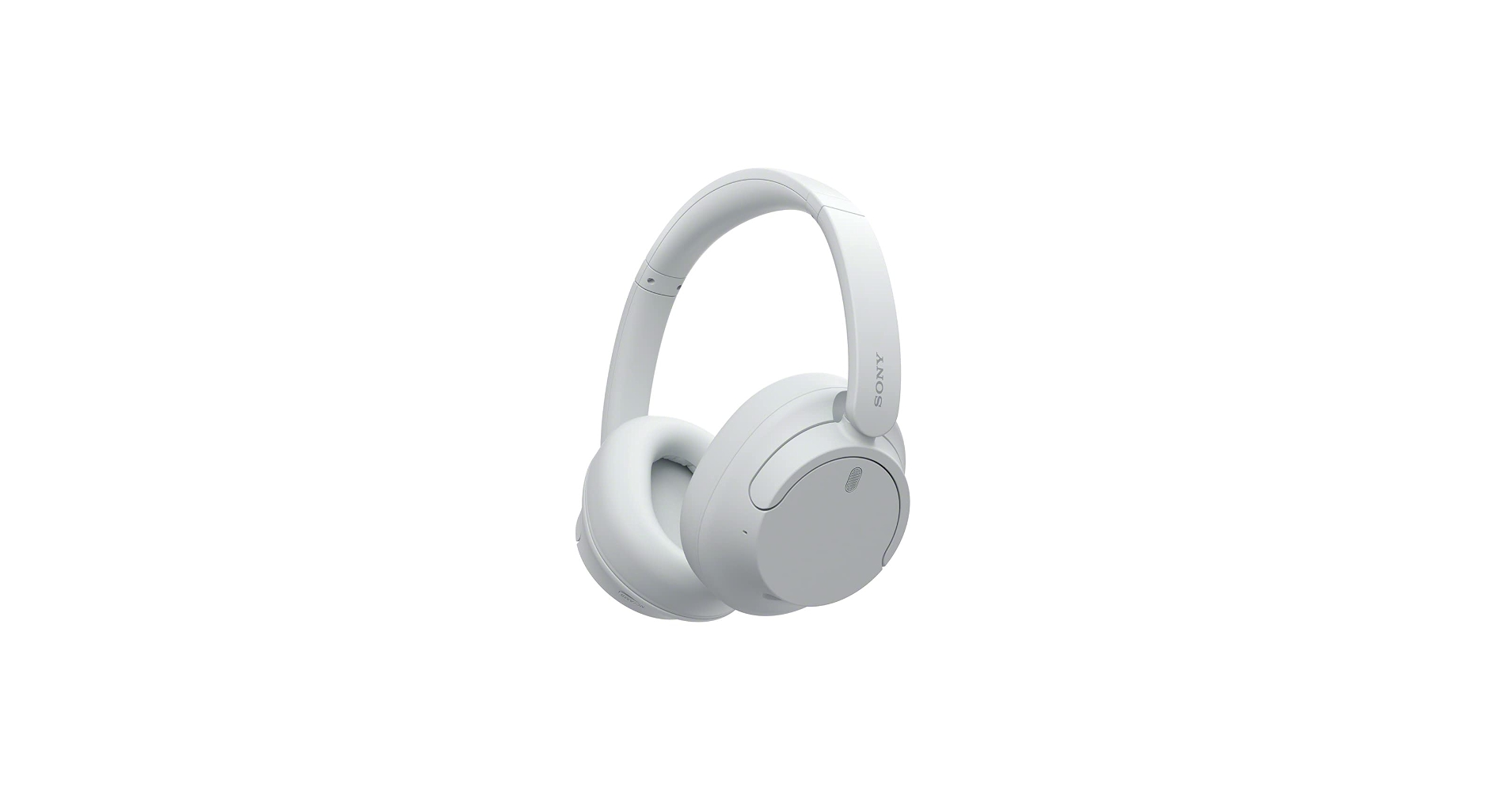
Sony WH-CH720N Noise Canceling Wireless Headphones
Sony WH-CH720N consists of four main strengths: good sound, a comfortable design, good battery life, and useful features. A bonus is the active noise cancellation and voice pickup, while the headphones were introduced at a lower price than Sony’s flagship models. Sony upgraded the WH-CH720N compared to the WH-CH710N launched in 2020. The WH-CH720N uses Sony’s Integrated Processor V1, which supports its noise-canceling and voice-related features. The headphones are also lightweight and designed for comfortable everyday use.
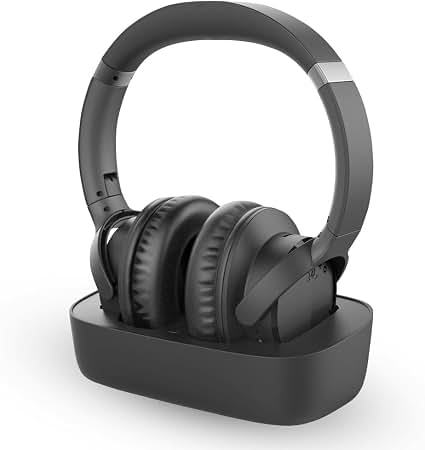
Sennheiser RS 175 RF Wireless Headphone
Sennheiser RS 175 RF is wireless, but it uses an RF transmitter rather than Bluetooth. The headphones themselves are lightweight and designed for long viewing sessions. They have a wireless range of up to 328 feet under ideal line-of-sight conditions. The ear cups have space for rechargeable batteries. If your TV has a 3.5-millimeter analog audio output, you can connect the provided 3.5-millimeter audio cable from the TV’s output to the transmitter.
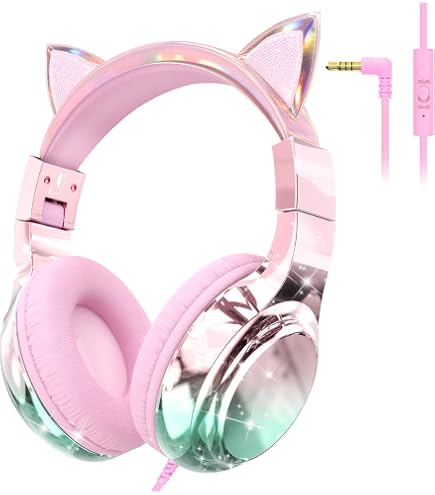
Ledeez Wired Pink LED Cat Headphone
LED Cat headphones are collectible and desirable for kids. The headphones can be folded for portability, and the earcups can be adjusted for a better fit. They have comfortable padding on either side. The standard cord is five feet long with a 3.5-millimeter plug, making it suitable for compatible phones and other devices. The headphones also include a microphone for calls. One of the features of these headphones is the LED portion, which is powered by a battery. The price can vary depending on where you buy them.
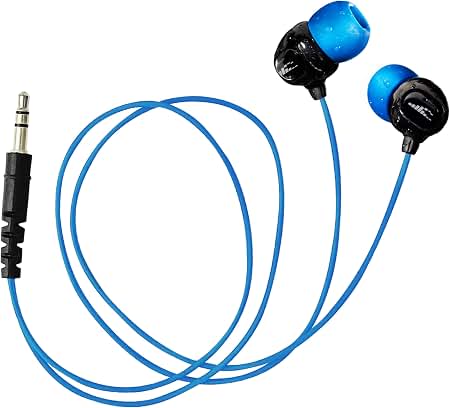
H2O Audio Surge+ Headphone
The Surge+ is a waterproof headphone designed for swimming. The Surge+ uses custom-developed speaker drivers designed to provide rich, bass-amplified sound. They come with a short cord that helps reduce cable hassle and are designed to work with a head-mounted MP3 player such as the H2O Audio Stream MP3. The speakers are designed to sit flush with the ear to reduce drag, and several ear-tip sizes are included for a better fit. The headphones are designed for heavy perspiration and underwater use, making them suitable for swimming when used with a compatible audio player.
Frequently Asked Questions
Are wireless headphones better than wired headphones?
Neither is always better. Wireless headphones offer greater freedom of movement and convenience, while wired headphones do not require charging and can provide a direct connection to compatible devices.
What is the difference between open-back and closed-back headphones?
Open-back headphones allow some air and sound to pass through the back of the earcups, which can create a more natural listening experience. Closed-back headphones have sealed earcups that provide better isolation from surrounding noise and reduce sound leakage.
What does headphone impedance mean?
Impedance is the electrical resistance of headphones, measured in ohms. Headphones with higher impedance may require more power from an amplifier, while lower-impedance models are generally easier to drive from devices such as smartphones and laptops.
What is frequency response in headphones?
Frequency response describes the range of frequencies a pair of headphones can reproduce, usually measured in hertz (Hz). It helps indicate how headphones reproduce low, mid, and high frequencies, although frequency response alone does not determine overall sound quality.
Can headphones affect hearing?
Listening at excessively high volumes for long periods can contribute to hearing damage. Keeping the volume at a reasonable level and taking regular breaks can help reduce the risk.
Conclusion
Headphones are a useful audio device for listening to music, watching movies, gaming, taking online classes, making calls, and many other everyday activities. Different types, such as over-ear, on-ear, open-back, closed-back, and earbuds, offer different levels of comfort, sound quality, portability, and noise isolation. Wireless headphones provide more freedom from cables, while wired headphones can still be a practical choice depending on the device and intended use. Overall, choosing the right headphones depends on your listening needs, comfort, sound preferences, portability, and where you plan to use them
On This Page
- What are the types of headphones?
- What can headphones be used for?
- Features of headphones
- What are the parts of a headphone?
- Advantages of headphones
- Disadvantages of headphones
- What are wireless headphones?
- What are headphones made of?
- How do headphones work?
- Sony WH-CH720N Noise Canceling Wireless Headphones
- Sennheiser RS 175 RF Wireless Headphone
- Ledeez Wired Pink LED Cat Headphone
- H2O Audio Surge+ Headphone
- Frequently Asked Questions
- Conclusion