
HEADPHONEPILOT BUYING GUIDE
Best Headphones for Mixing and Mastering
Choosing the right headphones for mixing and mastering can make it easier to hear the details and balance of a recording. These headphones are used by mixing and mastering engineers to work on music and for critical listening. Mixing engineers adjust the balance and levels of different sounds so that the music can be heard properly, while mastering engineers focus on improving the overall sound of the finished recording. Good mastering headphones can help engineers hear details and make more precise decisions.
The headphones below are among the models worth considering for mixing and mastering. Each one has different strengths, so the right choice depends on your studio setup, budget, and listening preferences.
Pick #1
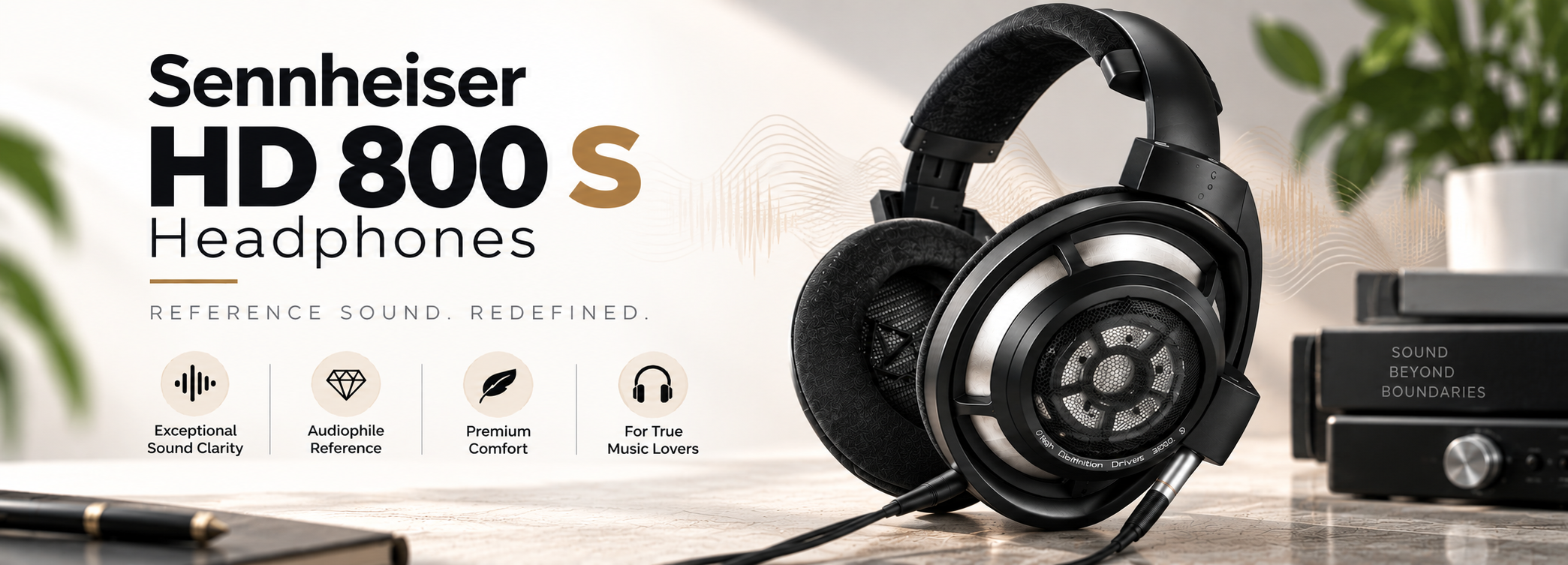
Sennheiser HD 800 S
The Sennheiser HD 800 S is an incredible sort of audio microscope for analyzing the smallest details and nuances in a track. The HD 800 S was designed to maintain that aptitude for critical listening while making the headphones a little more accurate and musical in some ways. It remains a premium reference option for detailed listening.
Pros: It has the best sound quality and is comfortable due to its lightweight design.
Cons: It is expensive, and the ear pad material may not appeal to everyone.
The HD 800 S has a distinctive design, and the build quality is generally solid. It combines aluminum and plastic construction, while the wide headband provides a comfortable fit. The open-back design and large earcups give the headphones an expansive presentation that can be useful when making critical mixing decisions.
Inside the box, you get two cables. One is a 4.4 mm balanced cable, and the other is a 6.3 mm cable. The cables themselves are fairly substantial, with a cloth-wrapped design. There is also a physical manual. Because of its solid construction and comfortable fit, the HD 800 S can work well during long mixing and mastering sessions.
The HD 800 S has a 300-ohm impedance and a 330 g weight. Its current specifications include a 4 Hz–51 kHz frequency response and less than 0.02% THD at 1 kHz. It is an open-back, circumaural headphone.
Pick #2
Beyerdynamic DT 880
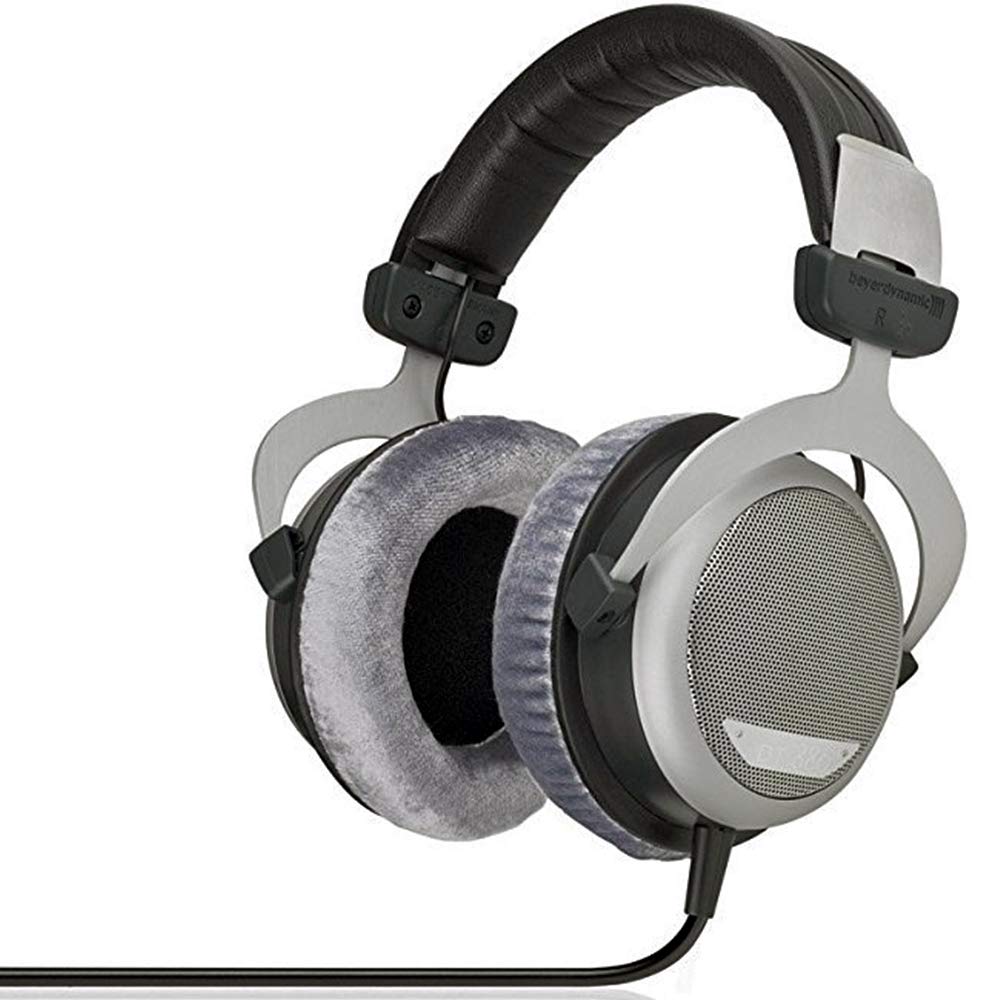
The Beyerdynamic DT 880 comes in different impedance versions, including 32, 250, and 600 ohms, depending on the version. The DT 880 Pro is available in 250 ohms and uses a coiled cable. One of the unique features of the Pro version is the coiled cable, which can be convenient in a professional studio because it does not hang loosely across your desk or around your chest and neck.
Pros: Strong build quality, good audio reproduction, and a spacious soundstage.
Cons: The Pro version has a tighter fit; semi-open construction provides less isolation than closed-back headphones.
The DT 880 has a quarter-inch adapter, and the adapter is screw-on. The Pro version also has tighter headband pressure than the Edition version. That tighter fit can be useful in a studio environment, although some people may prefer the softer fit of the Edition model.
The DT 880 uses a semi-open design, so it does not provide the same isolation as a closed-back studio headphone. Its sound is designed around neutral highs and bass tones with good spatial reproduction. Beyerdynamic still lists the DT 880 Edition in its current product range, with 32, 250, and 600-ohm versions available.
The 250-ohm DT 880 Edition weighs about 290 g without its cable and has a stated frequency response of 5–35,000 Hz.
Pick #3
Sony MDR-7506
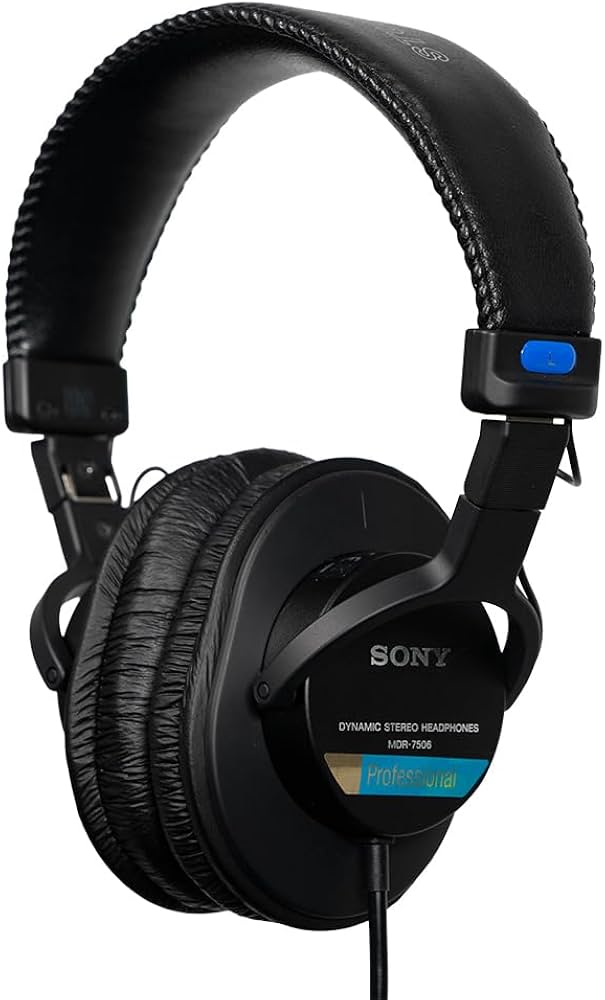
The Sony MDR-7506 has been a popular choice for professional audio monitoring for many years. It is an over-ear, closed-back headphone with 40 mm drivers and a folding design. The closed-ear construction provides passive isolation, which makes it particularly useful for recording sessions and situations where outside sound needs to be reduced.
Pros: Comfortable design; lightweight; good passive isolation; folding construction.
Cons: Soundstage is not as spacious as open-back headphones; non-detachable cable; ear pads can wear out over time.
These headphones are made largely from plastic, which helps keep them lightweight, although they do not feel as substantial as some more expensive studio headphones. They come with a soft carrying pouch, but the pouch offers limited protection compared with a hard case.
One useful feature of the MDR-7506 is its folding design. Pushing the earcups up toward the headband makes the headphones considerably smaller, which is convenient for storage and transportation.
The MDR-7506 uses a non-detachable coiled cable and comes with a gold-plated 3.5 mm/6.3 mm adapter. Sony currently lists the MDR-7506 as a professional stereo monitor headphone and continues to sell it as part of its professional audio lineup.
For mixing, the MDR-7506 can be useful for checking details and making decisions on a closed-back reference headphone. However, its closed design and more limited spatial presentation make it different from open-back models such as the HD 800 S or HD 600.
Sennheiser HD 600
The Sennheiser HD 600 dynamic driver moving-coil headphone is one of the best-known headphones for critical listening at a reasonable price compared with high-end reference models. It delivers a detailed sound that can be useful when listening closely to music.
Pros: Excellent sound quality; simple design; lightweight; reliable construction.
Cons: The headband can feel firm initially; no passive isolation because of the open-back design.
It looks classy and simple, with a straightforward design and large earcups. When it comes to build quality, the HD 600 is made from plastic but still feels sturdy and uses materials designed for long-term use. These headphones are also known for their reliability and relatively low weight.
When you first wear the HD 600, the fit can feel snug. They loosen a little over time and can become quite comfortable for long listening sessions. The clamping force may still be noticeable for some people, but the lightweight design helps make them suitable for extended use.
Because the HD 600 is open-back, it does not provide noise isolation. That is not necessarily a disadvantage in a quiet studio, but it makes the headphone less suitable for recording in the same room as an active microphone.
The current HD 600 has a 300-ohm impedance, weighs approximately 260 g without the cable, and uses a dynamic open-back design. Sennheiser lists its frequency response as 12 Hz–40,500 Hz.
Pick #4
Shure SRH1840
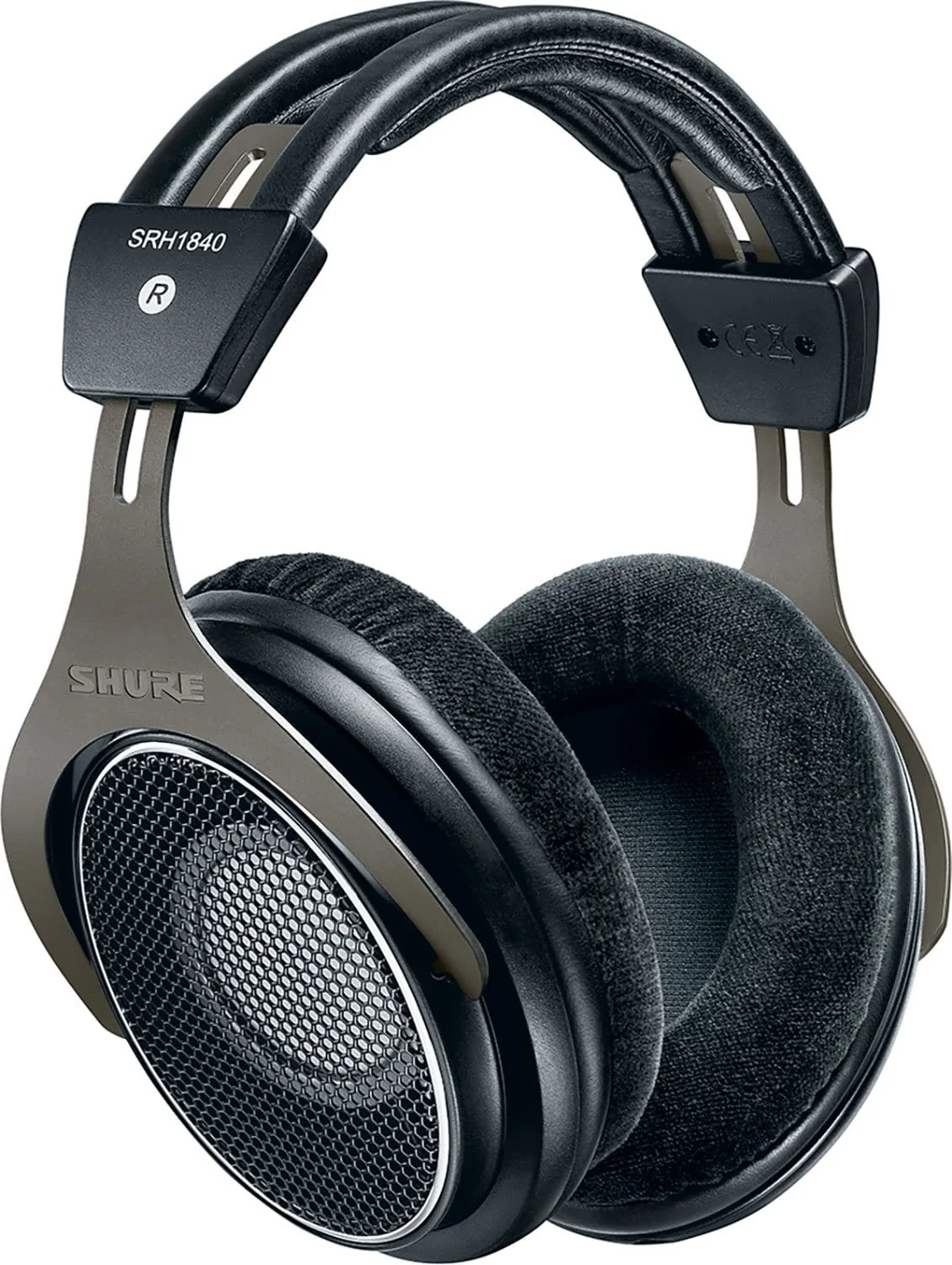
The Shure SRH1840 is a lightweight open-back headphone that sounds good and is designed for critical listening. I like the arc of the headband and the soft feel of the pads. They stay comfortably in place and are suitable for extended listening sessions.
Pros: Lightweight; durable construction; excellent comfort; good stereo imaging.
Cons: Expensive; open-back design provides no isolation.
Shure uses individually matched 40 mm drivers in the SRH1840. The open-back construction provides an airy presentation, while the lightweight design makes the headphones comfortable to wear for long periods.
When it comes to stereo imaging and soundstage, the SRH1840 can be particularly useful in a mixing application. The ability to locate instruments across the stereo image is an important consideration when making critical decisions with headphones.
The SRH1840 weighs about 268 g without the cable and has a frequency response of 10 Hz–30 kHz. It uses a 65-ohm impedance and comes with a detachable 2.1 m dual-exit cable.
For music applications and critical decisions, these headphones can do a good job. Their combination of comfort, imaging, and open-back design makes them a strong option for mixing and detailed listening.
Our Methodology
We publish independent headphone reviews and buying guides, updated regularly, so you can buy with confidence.
Which Headphones Are Best for Mixing and Mastering?
The Sennheiser HD 800 S stands out when detailed listening and a spacious presentation are the main priorities. The Beyerdynamic DT 880 offers a different approach with its semi-open design and long-running studio reputation. The Sony MDR-7506 is a practical closed-back option for monitoring and recording, while the Sennheiser HD 600 and Shure SRH1840 are strong open-back choices for critical listening.
The choice should depend on the type of work being done. Open-back headphones such as the HD 800 S, HD 600, and SRH1840 can be useful for mixing in a quiet environment, while the closed-back MDR-7506 is more practical when isolation matters.
Choosing the Right Headphones for Your Studio
According to our suggestions and recommendations, the Sennheiser HD 800 S and Beyerdynamic DT 880 are among the strongest choices in this list. Both offer strong performance and useful features for critical listening, although they serve different purposes.
The HD 800 S is the better choice for someone who prioritizes a wide, detailed presentation and does not mind its premium price. The DT 880 is a more practical option for someone who wants a semi-open design and a long-established studio headphone.
The Sony MDR-7506 makes more sense for recording, monitoring, and situations where passive isolation is useful. The Sennheiser HD 600 is a strong choice for straightforward open-back critical listening, while the Shure SRH1840 is worth considering when comfort and stereo imaging are high priorities.
No single headphone is perfect for every mixing and mastering setup. Room acoustics, speakers, headphone amplification, monitoring habits, and familiarity with a particular headphone all affect mixing decisions. For that reason, headphones are best used as one part of a monitoring system rather than as the only reference.
Frequently Asked Questions
Are open-back headphones better for mixing and mastering?
Open-back headphones are often preferred for mixing because they can provide a more spacious presentation and do not isolate the listener from the room as much as closed-back designs. They are best suited to quiet environments and are not ideal for recording because sound can leak from the headphones.
Are closed-back headphones good for mixing?
Yes. Closed-back headphones can be useful for mixing, particularly when you need isolation from outside noise or want to prevent headphone sound from reaching a microphone. The Sony MDR-7506 is an example of a closed-back professional monitor headphone.
Is the Sennheiser HD 600 good for mixing?
The HD 600 can be a strong option for critical listening and mixing, particularly in a quiet environment. Its open-back design provides no isolation, and its 300-ohm impedance means the source should be capable of driving it properly.
Is the Beyerdynamic DT 880 good for mixing?
The DT 880 can work well for mixing because its semi-open design provides a spacious presentation while retaining some attenuation of outside sound. The DT 880 Pro is intended for professional applications, while the Edition models are designed more toward home listening.
Is the Sony MDR-7506 still worth it?
Yes. Sony continues to list the MDR-7506 as a professional stereo monitor headphone, and it remains part of Sony’s professional headphone lineup. Its closed-back design, folding construction, 40 mm drivers, and passive isolation make it particularly useful for monitoring and recording.
Do you need an amplifier for mixing headphones?
It depends on the headphone and the audio interface or source. Higher-impedance headphones such as the 300-ohm Sennheiser HD 600 and HD 800 S can benefit from a capable headphone output, while lower-impedance models may be easier to drive from a wider range of equipment.
Can one pair of headphones be used for both mixing and mastering?
Yes, but it is useful to check your work on more than one monitoring system. A pair of headphones can reveal details that are easy to miss elsewhere, but mixing and mastering decisions are more reliable when checked across headphones, studio monitors, and other familiar playback systems.